
EM-FIBERGLAS A/S
Tooling materials
Direct Moulds
For prototypes and low-volume production, direct moulds are often the most efficient and cost-effective solution. These moulds are typically used for up to 5–10 parts and are ideal during the development and validation phase.
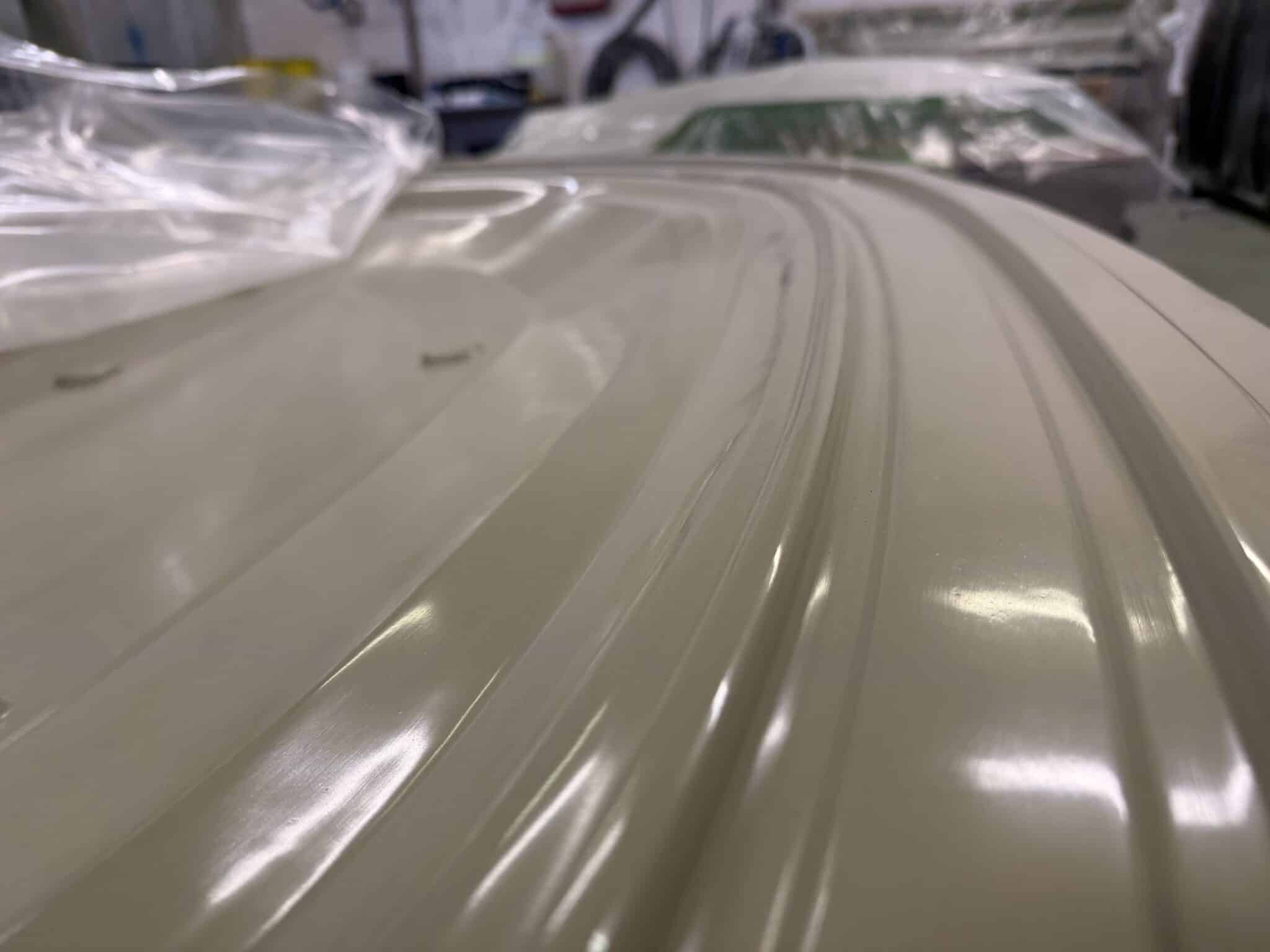
The mould is CNC-machined directly from high-density tooling foam to achieve precise geometries and dimensional accuracy. The surface is then sealed with a polyester coating, carefully sanded, and polished to create a high-quality finish. This ensures that the produced composite parts achieve a surface quality comparable to parts manufactured in more advanced production moulds.
Direct moulds offer fast lead times, low tooling investment, and flexibility for design changes during product development.
Fiberglass Moulds
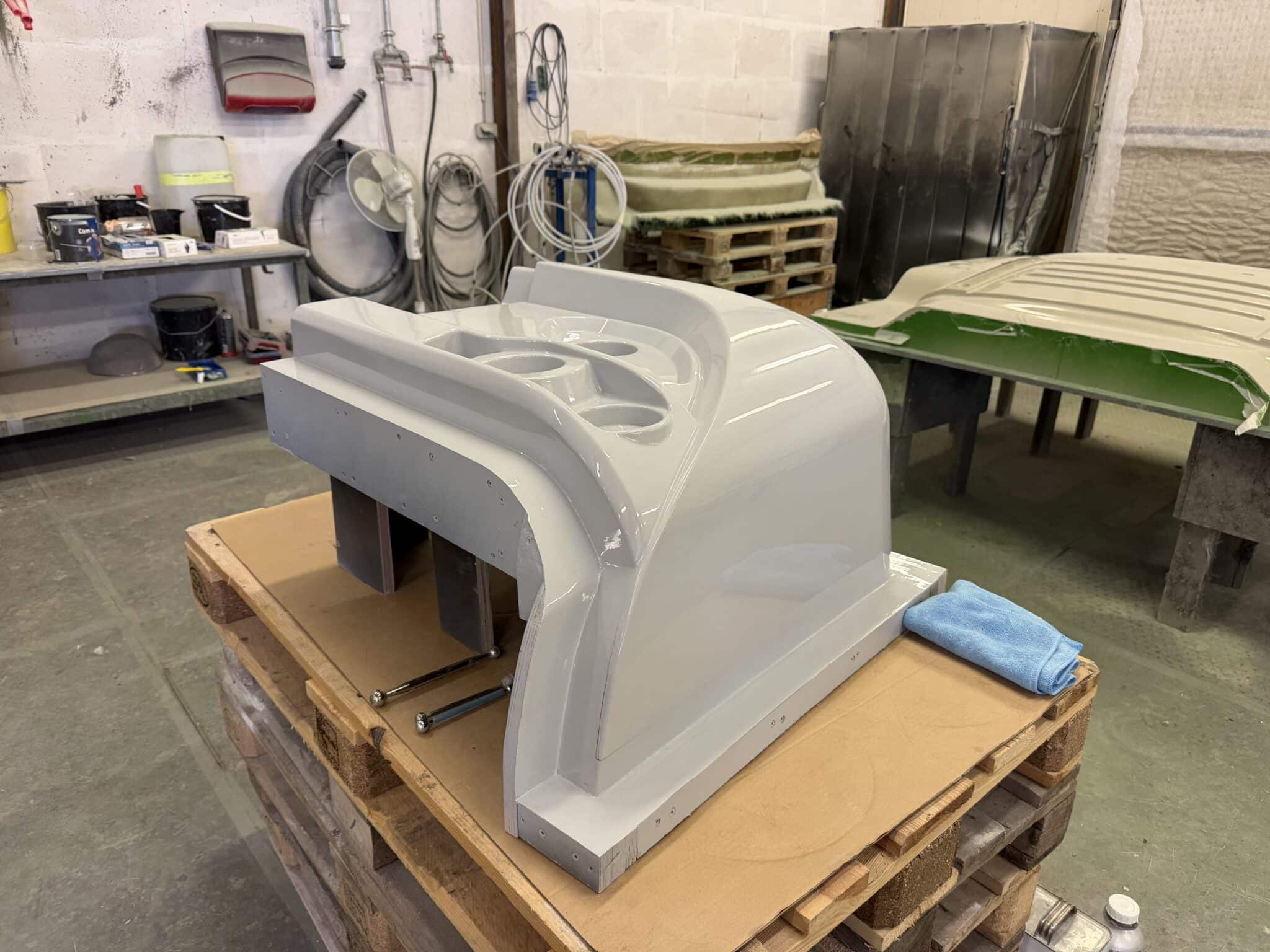
When the design is finalized and production volumes exceed approximately 10 parts, fiberglass moulds become a highly attractive solution. These moulds are manufactured in-house and specifically optimized for our RTM/RIM production processes.
The mould structure is built using reinforced composite laminates, combining durability with relatively low manufacturing costs. Fiberglass moulds typically support between 1,000 and 1,500 production cycles, depending on geometry, resin systems, and operating conditions. Over time, maintenance and refurbishment can be performed to further extend mould lifetime.
Compared to aluminium or steel tooling, fiberglass moulds offer a significantly lower investment cost while still providing excellent surface quality and reliable production performance for medium-volume manufacturing.
Aluminium Moulds
For high-volume production of smaller and medium-sized components, aluminium moulds are often the preferred solution. Aluminium tooling combines high dimensional stability with excellent thermal conductivity, making it especially suitable for RTM, RIM, and other closed-mould composite manufacturing processes.
Aluminium moulds provide long operational lifetimes with minimal maintenance requirements. Their temperature resistance and efficient heat distribution allow for faster curing cycles and compatibility with a wide range of resin systems.
Although the initial investment is higher compared to fiberglass moulds, aluminium tooling offers substantial advantages in production efficiency, repeatability, and durability. The moulds are manufactured in collaboration with specialized local machining and tooling partners.
Steel Moulds
For very high production volumes — typically exceeding 10,000 parts — nickel-chrome plated steel moulds are the optimal long-term investment.
Steel moulds offer exceptional durability, dimensional accuracy, and wear resistance, making them ideal for demanding industrial production environments. The nickel-chrome surface treatment further enhances corrosion resistance and ensures consistent part quality over extended production runs.
While steel tooling involves a higher upfront investment, the combination of extremely long service life, minimal maintenance, and stable high-volume production often results in the lowest cost per produced part over time.
Manufacturing steel moulds requires highly specialized tooling expertise. Through our trusted network of experienced tooling partners, we can deliver steel moulds in virtually any size and geometry.